
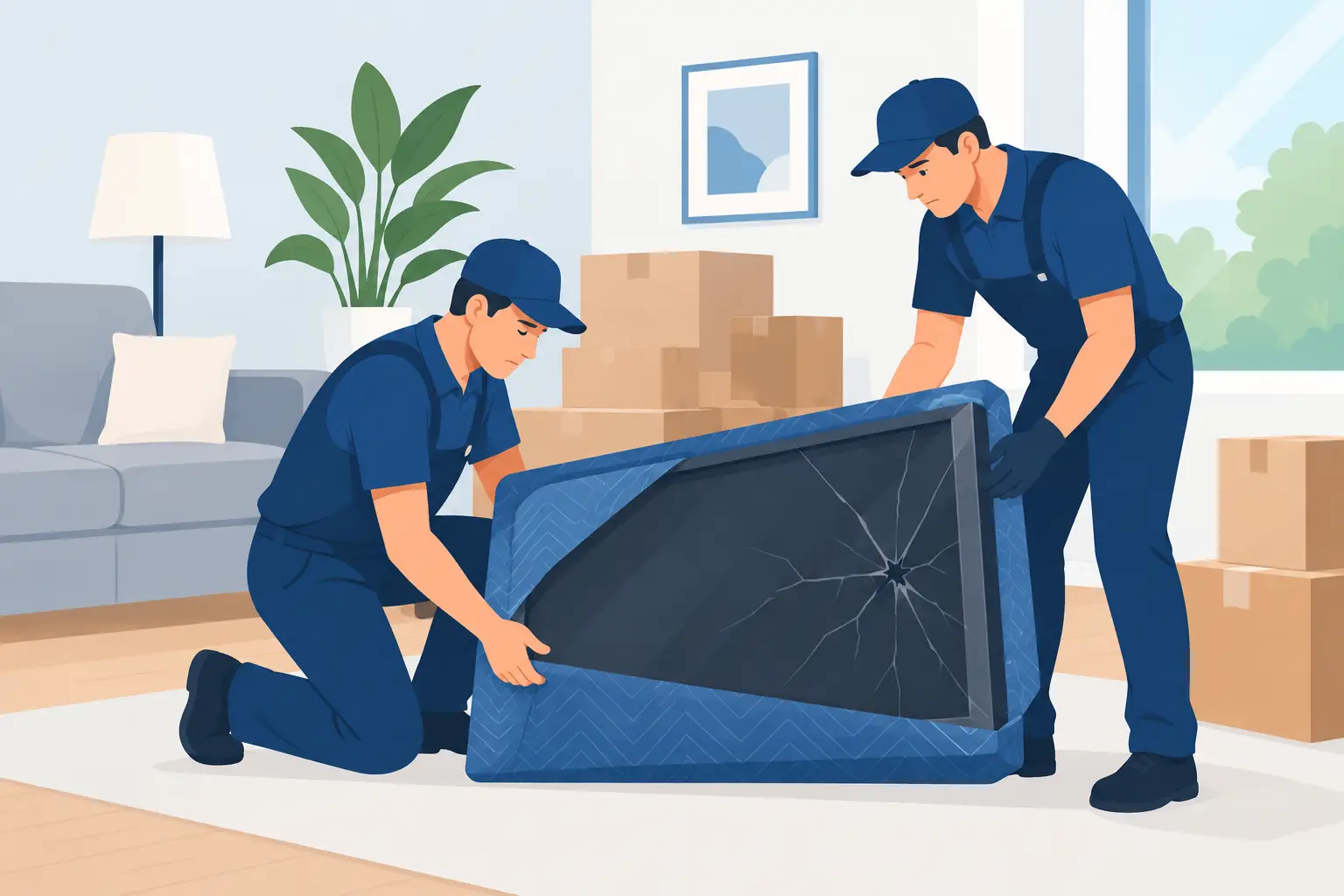
A dent in a dining table, a cracked television screen, or a missing box can turn move-in day into a serious problem. So, are movers responsible for damage? Sometimes, yes – but the answer depends on what happened, the coverage selected, the condition of the item, and how quickly the damage is reported.
A professional moving company should handle your belongings with care and explain its liability options before work begins. Still, moving liability is not the same thing as full-value insurance. Knowing the difference before loading day helps you make informed decisions, document your property properly, and respond confidently if something goes wrong.
When Movers Are Responsible for Damage
Movers can be responsible when damage results from their handling, packing, loading, transportation, unloading, or assembly work. For example, a mover may be liable if a dresser is dropped while being carried, a wall is gouged while furniture is moved through a hallway, or a properly packed box is crushed because it was loaded incorrectly.
Responsibility often comes down to negligence or a failure to provide the service agreed upon. If the crew did not use reasonable care, ignored handling instructions, failed to secure furniture in the truck, or caused damage during disassembly or reassembly, you may have grounds for a claim.
The details matter. A scratch on an antique cabinet may look similar to a new scratch, but a mover cannot fairly assess it without knowing the item’s prior condition. This is why the inventory, condition notes, and photos taken before a move are so valuable.
For business moves, the same principle applies to desks, office equipment, filing systems, and electronics. Clear labeling and a documented walk-through before and after the move can prevent disagreements about what was already damaged and what occurred during relocation.
What Moving Liability Usually Covers
Every moving company should provide a written explanation of its liability coverage. The exact rules vary based on whether the move is local, within Florida, or crossing state lines, so read the estimate, bill of lading, and valuation paperwork carefully.
Many moves include a basic level of released-value protection at no additional charge. This coverage is usually based on an item’s weight rather than its actual replacement cost. That means reimbursement for a damaged high-value item can be far less than what it would cost to repair or replace.
Some companies offer additional valuation options for a higher declared value or fuller protection. These options can provide stronger recovery in certain situations, but they also have terms, limits, deductibles, and exclusions. Ask for those details in writing. Do not assume that selecting a higher coverage option means every item will automatically be replaced at retail value.
If you own artwork, heirlooms, designer furniture, expensive electronics, or specialty equipment, tell the moving company before moving day. High-value items may require a separate inventory or declared-value form. For items that are irreplaceable, personal transportation or specialized shipping may be the better choice.
Liability Is Not the Same as Homeowners Insurance
A common misunderstanding is that a mover’s coverage works exactly like a homeowners or renters insurance policy. It does not. Moving valuation establishes the mover’s level of responsibility under the moving agreement. Your personal insurance may offer some moving-related protection, but coverage can vary widely by policy and cause of loss.
Before the move, call your insurance provider if you want to understand whether your policy covers belongings while they are being packed, transported, or stored. That conversation can help you identify gaps and decide whether additional protection makes sense.
Situations That May Not Be Covered
Movers are not automatically responsible for every issue discovered after a move. Certain circumstances can limit or eliminate a claim, particularly when the damage was not caused by the crew’s work.
Items packed by the customer are a common example. If a box was packed without sufficient padding and an item inside breaks during normal handling, the mover may not be responsible because the packing method could not be verified. A box that is poorly sealed, overloaded, or not labeled as fragile creates similar challenges.
Companies may also limit responsibility for pre-existing damage, mechanical or electronic failure unrelated to handling, and items that should not be transported in a moving truck. Perishable goods, hazardous materials, cash, important documents, medications, and sentimental valuables are generally better kept with you.
Weather and access conditions can matter as well. If a customer asks movers to proceed through a flooded path, a narrow stairwell, or an unsafe area after being advised of the risk, liability can become more complicated. A reliable crew will communicate concerns rather than take unnecessary risks with your property or the team.
How to Protect Your Belongings Before Moving Day
The best claims process is the one you never need. Preparation gives both you and your movers a clear record of the condition and value of your property.
Start by taking date-stamped photos or video of furniture, electronics, and other items with visible surfaces. Capture existing scratches, dents, or wear. For electronics, photograph model and serial numbers when practical. Keep receipts, appraisals, or replacement estimates for higher-value belongings in one accessible folder.
On moving day, walk through the home with the crew and point out items that need extra care. Mention loose legs, fragile glass, antiques, narrow doorways, and pieces that require disassembly. If you have selected packing services, make sure the crew knows which rooms or items are included before packing begins.
Read the inventory and moving paperwork before signing. If a condition note is inaccurate, ask for it to be corrected. It is much easier to resolve a documentation issue before the truck leaves than after delivery.
Professional packing can also reduce risk for fragile belongings. Proper cartons, padding, wrapping, and labeling are not just conveniences – they create a more secure system for loading and transport. For households with a mix of everyday items and specialty pieces, partial packing can be a practical middle ground.
What to Do If You Find Damage After a Move
Inspect your belongings as soon as possible after delivery. Do not wait until every box is unpacked if you notice obvious damage to furniture, walls, or large items. Take clear photos from several angles and include close-ups of the affected area.
If the damage is visible while the crew is still present, note it on the delivery paperwork before signing whenever possible. Stay factual: identify the item, describe the damage, and record the date. Avoid guessing about repair costs at that stage.
Then contact the moving company promptly and follow its formal claims process. Most companies require claims in writing and may have specific deadlines. Include your move date, shipment or job number, photos, inventory details, and any supporting documents that show value or repair costs. Keep copies of all communication.
Give the company an opportunity to inspect the item if requested. Depending on the circumstances and coverage selected, the resolution may involve repair, replacement, or compensation based on the applicable valuation terms. A reputable mover should communicate clearly about the next steps and avoid leaving you uncertain about who is handling the issue.
Questions to Ask Before You Book
Before choosing a mover, ask what level of liability is included, what additional valuation options are available, and how claims are submitted. Ask whether packing performed by the company is covered differently from customer-packed boxes, and whether there are special procedures for high-value items.
You should also ask how the company documents inventory and item condition, whether the crew is trained in furniture protection and packing, and what happens if damage is found at delivery. Clear answers are a sign that the company takes accountability seriously.
For homeowners and businesses in Central Florida, choosing a full-service provider such as Safe Hands Relocation can make these conversations easier because packing, handling, storage, and delivery can be coordinated through one service team. The key is still to review the written terms and select coverage that matches the value and risk level of your move.
A careful moving plan cannot prevent every accident, but it can prevent confusion. Photograph what matters, understand the protection you are choosing, and work with movers who treat clear communication as part of protecting your property.

